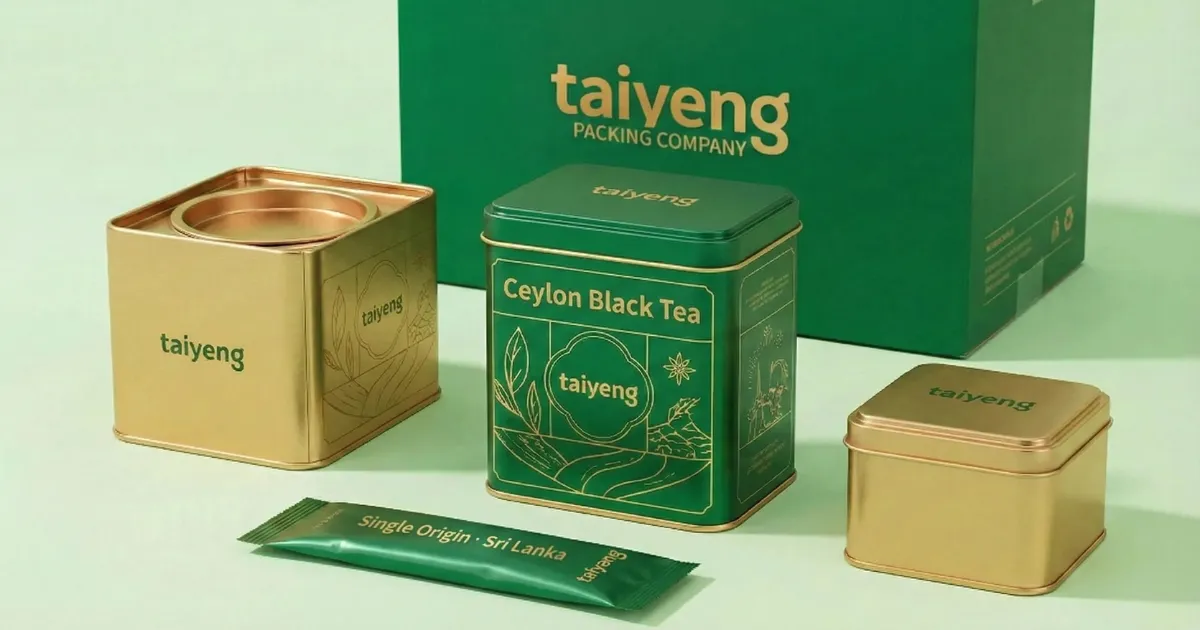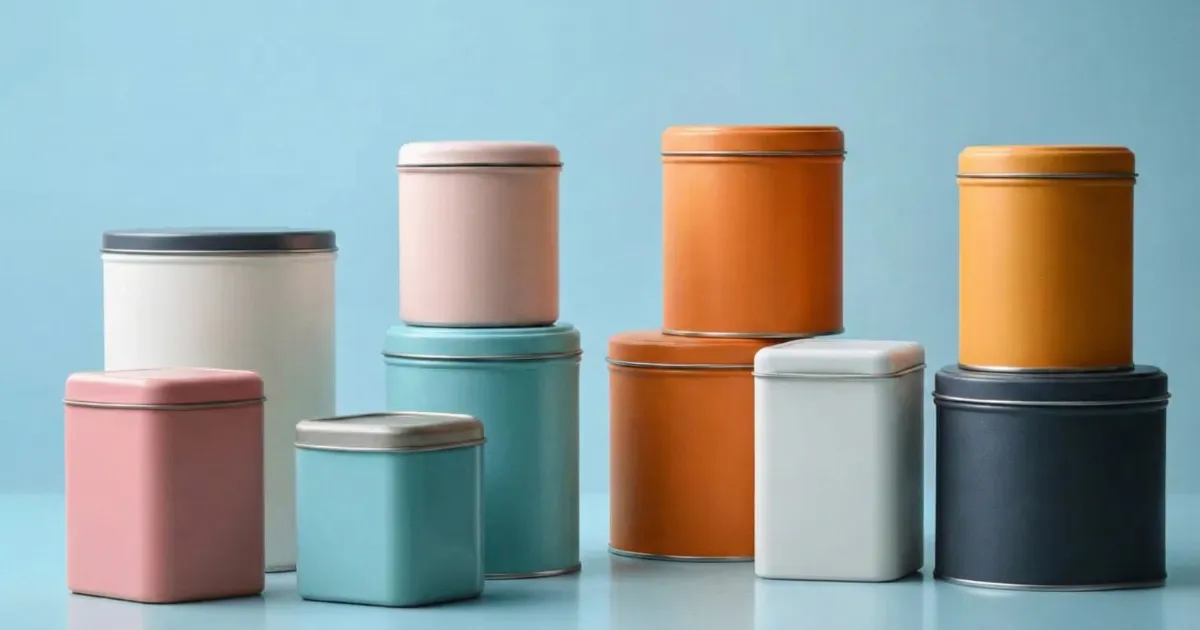
Are you searching for “Tin Can Manufacturers” or “Tin Can Suppliers”? Usually, your needs have been upgraded – you’re no longer just buying a few cans for storage, but you’re ready to do mass production or bulk purchasing of packaging to improve the quality of your products.
This Tin Can Knowledge article organizes the problems you’ll encounter in one go in the most intuitive and least confusing way possible.
What is a tin can? They’re actually tin cans.
The term “tin cans” usually refers to metal cans, but in the packaging of tea cans, biscuit gift boxes, candy cans and other common packaging, the most common material is actually ” tinplate “: the steel surface is tin-plated for durability and corrosion resistance, and then the outside is color-printed or surface-treated, which is why you can see all kinds of tin cans with a sense of texture and resistance to put away.
3 Common Ways to Say “Tin Can” in English
If you want to check the design of overseas products, you will use the “tin can English”:
- tin can: the most common, colloquial term for “tin can”.
- steel can :emphasize the material is steel can
- tinplate can: more accurately referred to as a “tinplate can”.
What are the uses of tin cans? Not only for storage, but also for gifts!
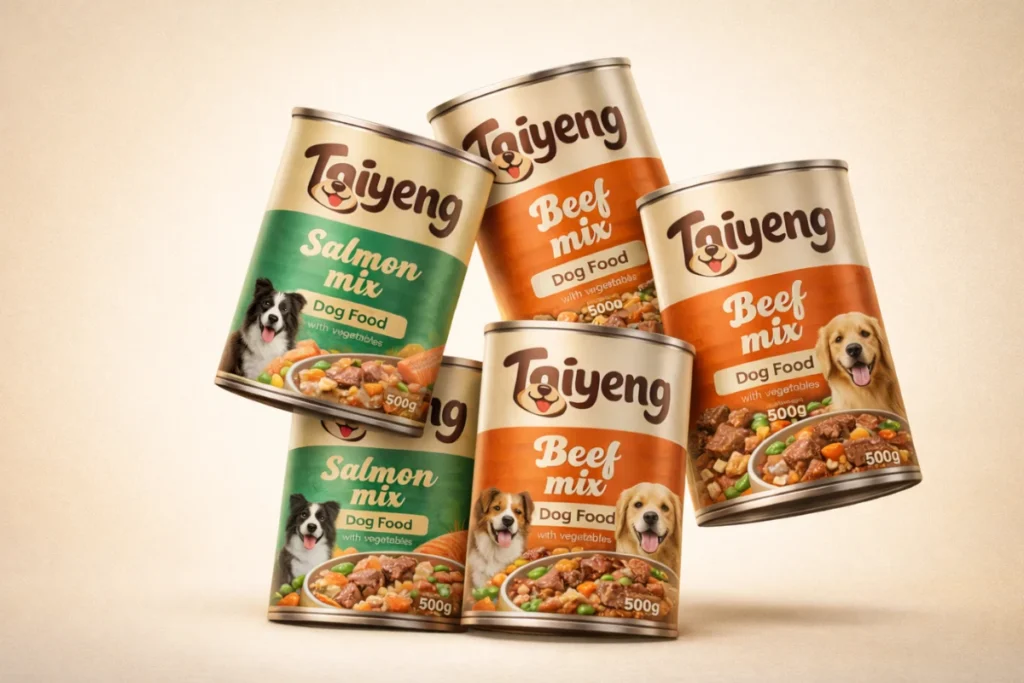
The reason why tin cans are so popular is that they are at the same time: blackout, moisture-proof, pressure-resistant, good for stacking, and highly malleable in appearance. Common uses include these:
- Tea and Coffee Cans: Preservation and Texture at the Same Time
- Cookie Candy Tin: Gift, collection, and can be used as decoration or storage box after eating.
- Storage tin cans: stationery, small items, souvenirs
- Preservation of dry goods: brewing powders, cereals, health products
How to tell the difference between steel and aluminum cans?
Comparison table of steel cans vs aluminum cans
| Comparison Items | metal pot | Aluminum Cans |
|---|---|---|
| magnetism | magnetizable | Usually not magnetized |
| durometer | Harder | Easier to pinch and dent |
| Common Scenarios | Tea, Biscuits, Gift Boxes, Storage | Ready-to-drink |
| weightiness | More “solid” feeling | Lightweight and portable |
Why are aluminum cans the most common type of steel cans? “Tin cans” may be a misnomer.
A lot of people look for metal cans in “tin cans”, but the reality is that most of the cans you see in convenience stores are aluminum cans. The reason is that aluminum cans are lightweight, have low transportation costs, and have a mature supply chain.
Beverages are more often found in tin cans, instead of outer packaging or gift box type packaging, such as: tea, coffee, brewing powder – the main focus: preservability, texture.
How do I dispose of my cans? 3 words: dump, flush, separate
You don’t have to wash your cans as well as you do your dishes to recycle them, but if you do at least three things, you’ll get points for recycling:
- Pour: Empty the contents first
- Rinse: Simply rinse or wipe to avoid odor and contamination.
- Split: Iron/Aluminum is best, but if you’re not sure, use magnets.
A little reminder: “Pressure containers” such as aerosol cans and gas cans may be handled differently, and it is safest to follow local regulations or designated recycling sites.
Where to Buy Empty Tin Cans: 3 Most Common Ways to Buy Empty Tin Cans and How to Choose Them
Where to buy tin cans at retail? Usually, you can choose a channel based on demand:
1. Packing houses/hardware houses
- Benefits: In stock, you can see the size and feel on site.
- Note: Specifications are based on common models.
2. packaging e-commerce / online shopping platforms
- Benefits: easy to compare prices, wide range of styles, home delivery
- Attention: communication, read the reviews, pay attention to the size error, pay attention to whether the inner cover/seal is included or not.
3. Cultural and Creative Selection / Baking Material Shop
- Benefits: Stronger sense of design, suitable for gifts
- Note: Unit price may be higher
Advanced: Looking for a customized tin can manufacturer? If you know these 3 tips, you can get a precise quote without stepping on the wrong one.
Will start to look for “tin can factory” “tin can factory” or “tinplate can making” usually means that your business has expanded. Maybe you want to make your own branded cans, or you feel that the commercially available public packaging cannot highlight the quality of your brand, and you want to upgrade to exclusive color-printed tin boxes.
At this point, don’t just look at the pictures and compare prices like you would in an online auction. If you want to use the logic of “wholesale customization” to negotiate a good price with the factory, it is recommended to clarify these three keys first so that you will not be treated as an amateur:
1. Specification should be precise, make good use of the “common model” to save big money.
The biggest variable in the cost of a tin can is the “mold”.
- Newbie question: “I want a square box for cookies.”
- An insider’s question: “Do you have a ready-made mold that is close to 15cm long x 10cm wide x 6cm high? Why? It costs tens of thousands of dollars to create a new mold, which is time-consuming and expensive. If you can use the factory’s existing “standard mold” for fine-tuning or direct application, you can save a huge amount of money on molding costs and have a faster delivery time.
2. Usage Honestly, coating is a matter of “food safety”.
The tin cans are not just iron, there is also a “coating” on the surface.
- General use: If it is only for stationery or packaging, rustproof is sufficient.
- Food Use: For direct contact with biscuits, tea leaves or powders, it is important to emphasize the need for food grade coatings (e.g. essential oils, clear oils) that meet FDA or SGS standards. This is a matter of food safety and corrosion protection, and should not be taken lightly.
3. Craftsmanship determines the budget and the devil is in the details.
Do you want to do full color printing or simple labeling?
- Printing: Four-color printing (CMYK) is used for general color printing, and digital printing can be used for efficient production.
Insider’s word: Cheap is not necessarily good, the focus is on the “invisible details”.
Often the difference in price is a couple of dollars, but the difference is in the “feel” and “yield”. Are the seams scratchy? Does the lid open and close smoothly? Has the coating been jerry-built? Instead of trying to save a small amount of money that will lead to subsequent customer complaints, it is better to choose a manufacturer with accurate sampling and stable quality, which is the real cost saving!
Why do some tin cans look so high class? The key lies in the “tin printing process”.
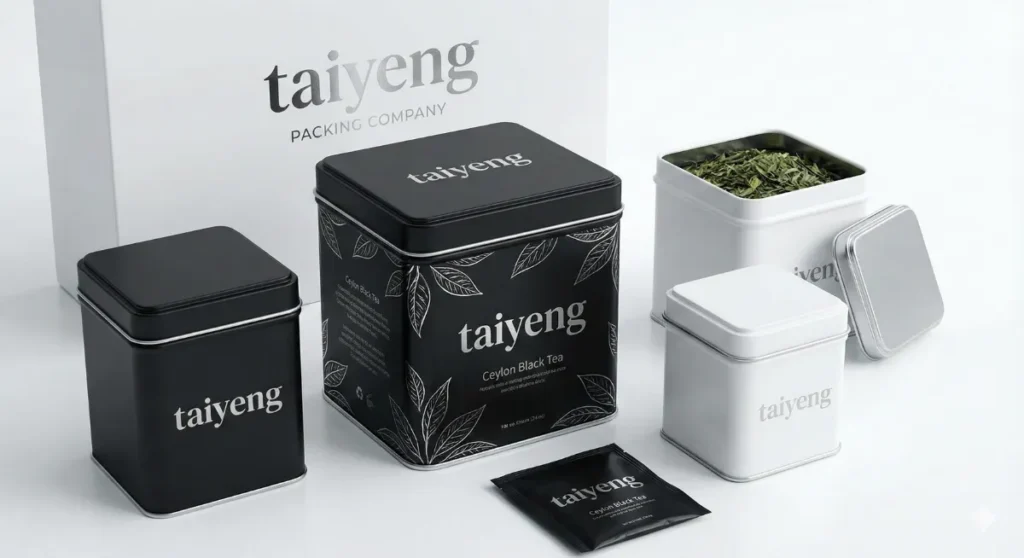
Most of the high quality gift boxes you see are not made from stickers, but through the technique of “tin printing”. This is a technique that utilizes the principle of lithographic printing, in which ink is printed directly onto a metal plate, which is then subjected to high-temperature baking and surface treatment.
If you are a small brand or a studio and want to upgrade your packaging from a “general container” to a “brand asset” in the future, there are two major advantages of choosing Taiyeng Metal ‘s metal stamping process:
- A jump in quality: The combination of metal’s unique luster and pattern is unmatched by paper boxes and stickers.
- More Durable and Resistant: The printed layer is abrasion-resistant and water-resistant, so the “retention rate” of consumers is greatly increased, and your brand can stay on your guests’ desktops for a long time.
FAQ: Frequently Asked Questions about Tin Cans
Q: Can tin cans be customized in small quantities?
Yes. Some tin can styles can be produced using existing molds combined with custom printing, making them suitable for market testing, promotional campaigns, or gift box packaging.
Q: Does small-quantity custom tin can production require a new mold?
If existing tin can molds are used, a new mold is usually not required. In most cases, only the printing design needs to be customized, which helps reduce both production cost and lead time.
Q: What products are tin cans suitable for packaging?
Tin cans are commonly used for packaging tea, cookies, candies, coffee, gift sets, and similar products. They offer advantages such as durability, moisture resistance, and an enhanced premium feel for the product.
Conclusion: Tin cans are not only good for use, but can also be turned into “durable and textured” lifestyle products.
Tin cans are heavily used in food products because they are durable, easy to store, and can combine preservation with aesthetics. If you buy an empty tin can, look at the purpose and fit first, and you’ll avoid most of the pitfalls.